

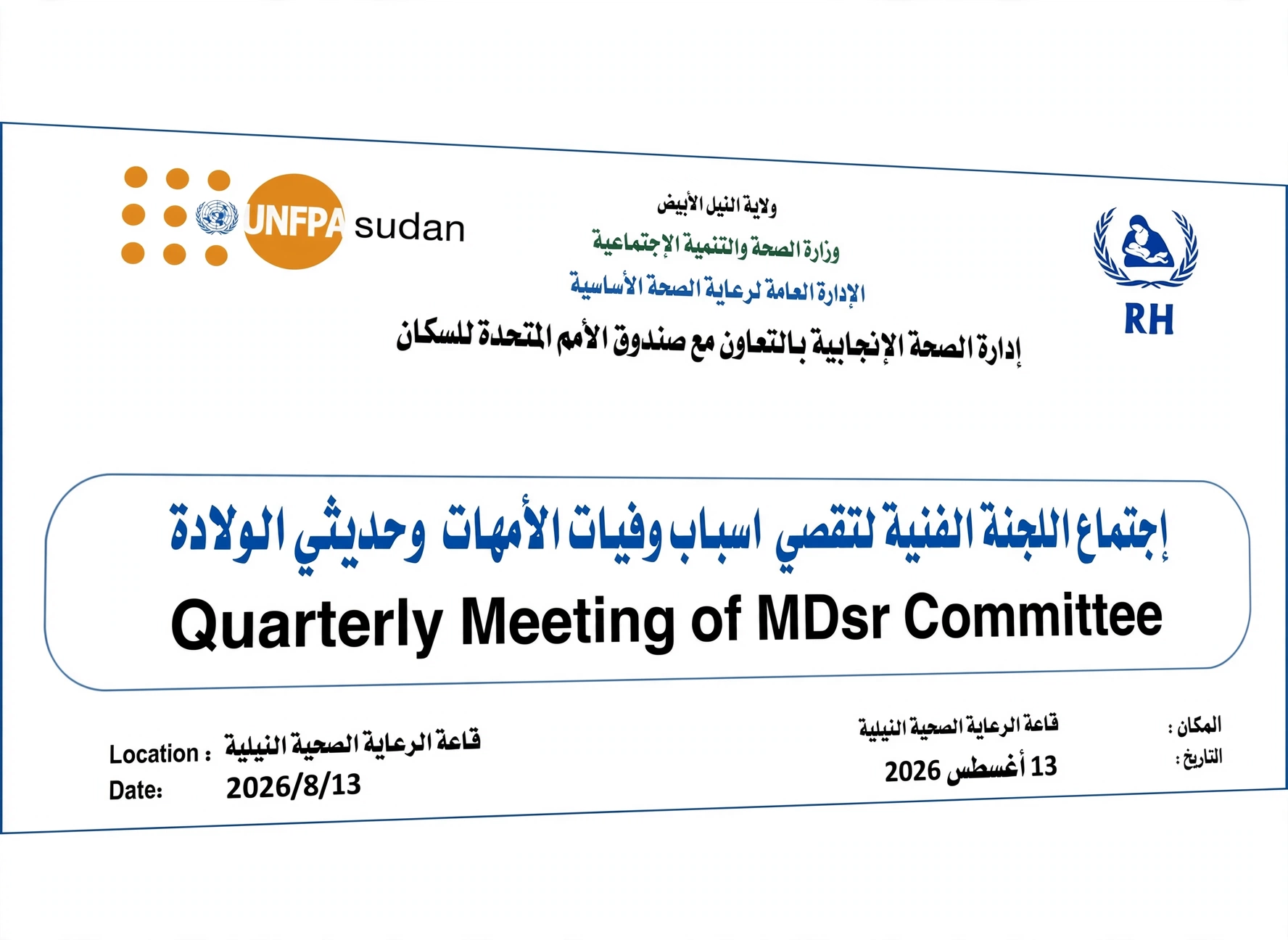
Under the auspices of UNFPA: The Technical Committee for Investigating the Causes of Maternal and Newborn Deaths Holds its Meeting in White Nile
Kosti – South Kordofan News
In an important step aimed at reducing the mortality rate among mothers and newborns in White Nile State, the Technical Committee for Investigating the Causes of Maternal and Newborn Deaths met at the headquarters of the United Nations Population Fund (UNFPA). The committee included representatives from the Reproductive Health Department and the Curative Medicine Department in White Nile State, specialists from the Obstetrics and Gynecology Department, representatives from White Nile State hospitals and a representative of the Military Medical Hospital in Kosti, in addition to a representative of the State Health Insurance and a number of departments of the Ministry of Health and Social Development in White Nile State.
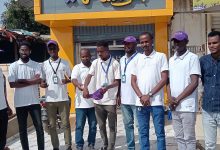


The meeting was funded by the United Nations Population Fund (UNFPA) in order to activate the surveillance system in reproductive health in the state’s hospitals and its various localities, where the history of the deceased mother’s admission to the hospital is investigated, what complications occurred, and when she died.
During the meeting, 44 cases of postpartum deaths from various localities in White Nile were discussed, although there are a number of localities that did not report. Each case was discussed separately, in order to reach professional recommendations and to avoid what led to the deaths of the mothers, may they rest in peace.

In a related context, Ms. Hala Mohamed Abdel Rahman Al-Naqr, Director of Reproductive Health in White Nile State, extended thanks to the technical committee that attended the meeting, explaining that a group of specialist doctors in the Obstetrics and Gynecology Department contributed effectively to enriching the discussion by virtue of their specialization and technical opinions that provide innovative solutions and possible treatments for the future of midwifery and postpartum care in White Nile State.
Al-Naqr added that among the most prominent objectives of the committee is to come up with recommendations that can reduce deaths resulting from lack of equipment, inefficiency of delivery rooms, unavailability of blood in blood banks, or insufficient training.
She stressed that the surveillance system is the best way to reach correct information.
Regarding the support provided to the reproductive health sector, Hala Al-Naqr explained that considerable support was provided by the United Nations Population Fund even during wartime, represented in supporting infrastructure and hygiene supplies, and contributing to performing cesarean operations and blood banks, which is the fruit of the recommendations presented by the surveillance teams.
In the context of enriching the discussion, the participants emphasized the necessity of training for cadres as well as spreading the culture of reproductive health among local communities through community mobilizers who have the ability to convey information in a simple and easy manner. They also called for the formation of social research committees in hospitals to intervene in cases of inability to pay for cesarean operations according to flexible controls.
As for Dr. Nusaiba Ballal Abdullah, Deputy Specialist in Obstetrics and Gynecology who works as a maternal mortality investigator in White Nile, she said that the meeting discussed maternal death cases from January to July 2026, and added that the most important causes of death were bleeding, toxemia (preeclampsia/eclampsia) and what is locally known as “kalabsh” (seizures/eclampsia). She confirmed that all these cases were not following up with a doctor, and this is attributed to the lack of sufficient reproductive health culture in their communities.
Nusaiba added that to improve the work, a qualitative developmental shift must be made in training cadres and providing oxygen as well as intensive care units in Kosti, Rabak and other hospitals in the state.
It is worth noting that the committee will submit its recommendations on the meeting in the coming days to the Ministry of Health and Social Development in White Nile State, to the United Nations Population Fund, and to the relevant authorities.
Report by: Mustafa Omer